

|
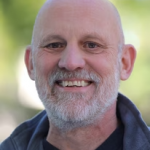
Tim Colonius is the Frank and Ora Lee Marble Professor of Mechanical Engineering and Medical Engineering at the California Institute of Technology. He is also the Executive Officer for Mechanical and Civil Engineering and holds the Cecil and Sally Drinkward Leadership Chair. He received his B.S. from the University of Michigan in 1987 and M.S and Ph.D. in Mechanical Engineering from Stanford University in 1988 and 1994, respectively. He and his research team use numerical simulations and data-driven analysis to study a range of problems in fluid dynamics, including aeroacoustics, reduced-order modeling, flow control, instabilities, shock waves, and multiphase flow. He also investigates medical applications of ultrasound and cavitation. Prof. Colonius is a Fellow of the American Physical Society and the Acoustical Society of America. He was the recipient of the 2018 AIAA Aeroacoustics Award, the 2021 APS-DFD Stanley Corrsin Award, and he was the 2022 ASME Freeman Scholar. He is an author of more than 350 publications, and he is the former editor-in-chief of the journal Theoretical and Computational Fluid Dynamics. |
|
OWNS, NOWNS, and Unknowns: Efficient and robust tools for transition prediction Accurately predicting instability and transition to turbulence in boundary layers is critical for aerodynamic design yet remains difficult for complex geometries and hypersonic flows where global stability methods are computationally prohibitive. We introduce the One-Way Navier–Stokes (OWNS) equations—a fast, streamwise-marching framework for modeling linear disturbance evolution in free-shear and boundary layers. OWNS eliminates key limitations of quasi-parallel approaches such as the parabolized stability equations (PSE) while maintaining high efficiency. We further extend the method to nonlinear interactions (NOWNS), enabling prediction of early-stage transition dynamics. OWNS also supports inverse stability analysis to identify optimal disturbances when initial conditions are unknown. In addition, we present a new receptivity framework—applicable to OWNS and global solvers—that uses optimization to determine combinations of acoustic, vortical, and entropic free-stream disturbances that maximize boundary-layer amplification. Together, these advances provide a powerful and computationally efficient toolkit for tackling instability, receptivity, and transition in realistic, high-speed aerodynamic configurations. |
|

|
Jacob Page is a Reader (Associate Professor) in Applied and Computational Mathematics at the University of Edinburgh. He was previously the Sultan Qaboos Research Fellow in mathematics at Corpus Christi College, University of Cambridge, and obtained his PhD from Imperial College London in 2016. He is interested in the nonlinear dynamics of both Newtonian and non-Newtonian fluids and uses ideas from modern dynamical systems theory combined with data-driven techniques and machine learning to study transitional and turbulent flows. His group’s recent work has focused on the utility of “online learning” techniques in a variety of problems related to the dynamical systems view of shear flow turbulence. His work is/has been supported by an ERC Starting Grant, EPSRC and the Met Office. |
|
Differentiable flow solvers and online learning for the dynamical systems view of turbulence Online learning is a technique in which a differentiable flow solver is included inside the training loop for a neural network. One common use case in fluid mechanics is subgrid scale parameterizations in turbulence. In that problem, online learning produces schemes that are more stable than their “offline” counterparts, but the approach can also be used in a variety of other problems, including solution discovery and state estimation. In this talk I will describe three problems rooted in a “dynamical systems” view of fluid motion in which differentiable solvers play a critical role. First, I will show how the search for unstable periodic orbits – exact solutions of the Navier-Stokes equations which contain a particular recurrent process relevant to the chaotic flow – can be framed as an optimization problem. A scalar loss function which measures the distance between the state and its location a time T later is minimized using a combination of differentiation through the solver in combination with a high-dimensional optimizer. The approach converges an order of magnitude more solutions in a two-dimensional Kolmogorov flow than have been computed by earlier methods. In the second problem, I will present an online-learning algorithm for super resolution. Super resolution refers to the prediction of a high-resolution flow snapshot (usually with a neural network) given coarse-grained observation. In contrast to the usual approach, our method does not require a library of high-resolution snapshots: the loss function is a modification of the variational 4DVar algorithm for state estimation and seeks to match the coarse-grained evolution of the predicted state to measurements. I will compare the performance to classical 4DVar and assess the impact of known limiting length scales for assimilation. Finally, I will describe a method to learn mappings between a family of dynamical systems, with a training algorithm motivated by the definition of topological equivalence. The resulting neural networks allow for continuation of arbitrary solutions of the governing equations and extend the standard dynamical systems toolbox which can follow statistically steady states only. |
|
|
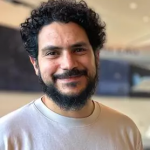
Marios Kotsonis is Professor of Flow Control at Delft University of Technology, Faculty of Aerospace Engineering. His interests cover laminar-turbulent transition, flow instabilities, flow control and flow actuators, using theoretical, numerical and experimental techniques. He is recipient of the Veni and Vici grants of the Dutch Research Council and Starting, Proof-of-Concept and Consolidator grants of the European Research Council. |
|
From wall impedance to fluidic crystals: Metamaterials for Controlling Boundary Layer Instabilities Metamaterials are engineered composite structures, able to invoke resonant and dispersive wave phenomena in classical fields such as optics, acoustics, and electrodynamics. Their resulting dynamic properties go beyond (i.e. meta) what is considered possible in nature. Such a key property of interest is the so-called “bandgap”, a range in which waves are suppressed when interacting with the Metamaterial. In this talk, a recent idea is explored, namely the use of Metamaterial-derived concepts for the control and attenuation of wave-like boundary layer instabilities, such as Tollmien-Schlichting waves. Recent numerical, theoretical and experimental work from the group of Flow Control at TU Delft will be discussed, followed by an outlook of current challenges and future directions. |
|

|
Professor Shervin Bagheri’s research explores the interaction between flowing fluids and materials to control and sense transport phenomena. His work spans laminar and turbulent flows over rough, porous, and lubricant-infused surfaces; biofilm growth and resistance in fluid environments; and flow through porous materials for energy and life-science applications. He earned his PhD in fluid mechanics at KTH on modal decomposition of transitional flows and later expanded into flow–material interactions. A Wallenberg Academy Fellow, SSF Future Research Leader, and ERC Consolidator Grant recipient, he leads the Fluids and Surface Group at KTH and coordinates the national initiative FLUX bringing together Swedish fluid mechanics researchers to address key challenges in science and technology. |
|
Model reduction and control of Flows over complex and responsive Surfaces Flows over complex surfaces exhibit rich physics that offer opportunities for control—such as drag reduction or heat transfer enhancement—but can also lead to detrimental effects like increased drag from roughness or contamination by bacterial biofilms. In some systems, surfaces (such as rough or porous materials) passively modify momentum transfer without being significantly affected by the flow. In others, including bacterial biofilms or lubricated walls, the surface evolves dynamically under flow, resulting in strong coupling and feedback between surface and flow. This talk presents recent progress toward reduced-order and data-driven models that efficiently capture these interactions. For passive surfaces, homogenization and machine-learning approaches are used to represent their effective influence on the flow. For responsive surfaces, models describe and eventually enable control of the coupled surface–flow evolution. Together, these advances provide new ways for predicting and controlling flow–surface interactions across physical and biological systems. |
|